ActiveRecord::Bogacs
ActiveRecord pooling "hacks" ... in a relaxed 'spa' fashion!
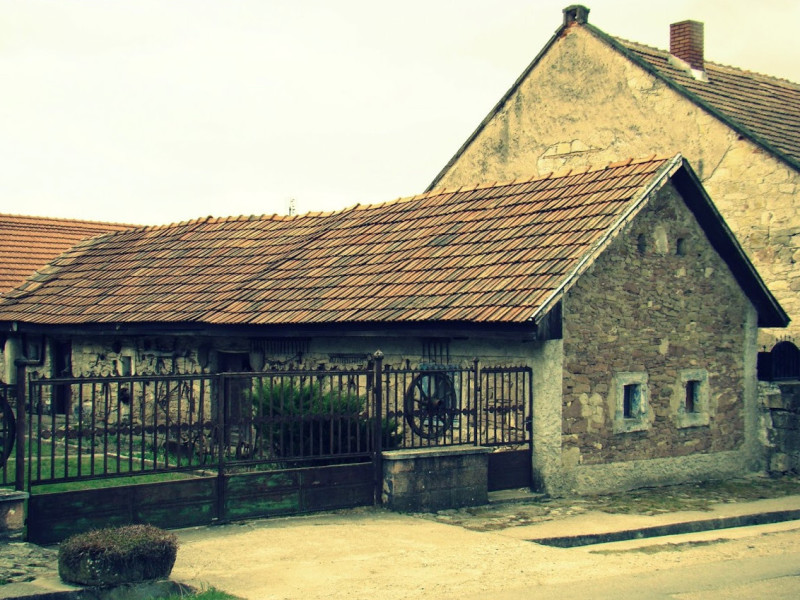
Bogács is a village in Borsod-Abaúj-Zemplén county, Hungary.
WiP: don't even thing about putting this on production (TEST IT OUT FIRST)!
Install
add this line to your application's Gemfile:
gem 'activerecord-bogacs', :require => 'active_record/bogacs'
... or install it yourself as:
$ gem install activerecord-bogacs
Setup
Bogacs' pools rely on a small monkey-patch that allows to change the AR pool.
The desired pool class needs to be set before establish_connection happens,
thus an initializer won't work, you might consider setting the pool class at
the bottom of your application.rb e.g. :
Bundler.require(*Rails.groups)

module MyApp
  class Application < Rails::Application
    # config.middleware.delete 'ActiveRecord::QueryCache'
  end
end

# sample configuration using the "false" pool
if Rails.env.production?
  pool_class = ActiveRecord::Bogacs::FalsePool
  ActiveRecord::ConnectionAdapters::ConnectionHandler.connection_pool_class = pool_class
end
pools are expected to work with older ActiveRecord versions, if not let us know.
Default Pool
Meant as a back-port for users stuck with old Rails versions (< 4.0) on production, facing potential (pool related) concurrency bugs e.g. with high-loads under JRuby.
Based on pool code from 4.x (which works much better than any previous version),
with a few minor tunings and extensions such as pool_initial: 0.5 which allows
to specify how many connections to prefill when the pool is created.
False Pool
The false pool won't do any actual pooling, it is assumes that an underlying pool
is configured. But it does maintain a cache of AR connections mapped to threads.
Ignores all pool related configuration pool: 42, checkout_timeout: 2.5 etc.
NOTE: be sure to configure an underlying pool e.g. with Trinidad (using the default Tomcat JDBC pool) :
---
  http: # true
    port: 3000
    # ...
  extensions:
    mysql_dbpool:
      url: jdbc:mysql:///my_production
      username: root
      jndi: jdbc/BogacsDB
      initialSize: <%= ENV['POOL_INITIAL'] || 25 %> # connections created on start
      maxActive: <%= ENV['POOL_SIZE'] || 100 %> # default 100 (AR pool: size)
      maxIdle: <%= ENV['POOL_SIZE'] || 100 %> # max connections kept in the pool
      minIdle: <%= ENV['POOL_SIZE'] || 50 %>
      # idle connections are checked periodically (if enabled) and connections
      # that been idle for longer than minEvictableIdleTimeMillis will be released
      minEvictableIdleTimeMillis: <%= 3 * 60 * 1000 %> # default 60s
      # AR checkout_timeout: 5
      maxWait: <%= (( ENV['POOL_TIMEOUT'] || 5.0 ).to_f * 1000).to_i %> # default 30s
ActiveRecord-JDBC adapter allows you to lookup connection from JNDI using the following configuration :
production:
  adapter: mysql2
  jndi: java:/comp/env/jdbc/BogacsDB
NOTE: using the FalsePool there's nothing to configure (in database.yml)
that is no_pool: 5 or checkout_timeout: 5 defaults!
Shareable Pool
This pool allows for a database connection to be "shared" among threads, this is very dangerous normally. You will need to understand the underlying driver's connection whether it is thread-safe.
You'll need to manually declare blocks that run with a shared connection (make
sure only read operations happen within such blocks) similar to the built-in
with_connection e.g. :
cache_fetch( [ 'user', user_id ] ) do
  ActiveRecord::Base.with_shared_connection { User.find(user_id) }
end
The pool will only share connections among such blocks and only if it runs out of all connections (until than it will always prefer checking out a connection just like a "regular" pool).
Only tested with ActiveRecord-JDBC-Adapter using the official Postgres' driver.
Copyright
Copyright (c) 2014 Karol Bucek. See LICENSE (http://en.wikipedia.org/wiki/MIT_License) for details.