Requestkit
Local HTTP request toolkit for development. Test Stripe webhooks, GitHub hooks or any HTTP endpoint locally. Your data stays private, works offline and runs fast without network latency.
Sponsored By Rails Designer

Installation
If you have a Ruby environment available, you can install Requestkit globally:
gem install requestkit
Usage
Start the server:
requestkit
This starts Requestkit on http://localhost:4000. Send any HTTP request to test:
curl -X POST http://localhost:4000/stripe/webhook \
  -H "Content-Type: application/json" \
  -d '{"event": "payment.succeeded", "amount": 2500}'
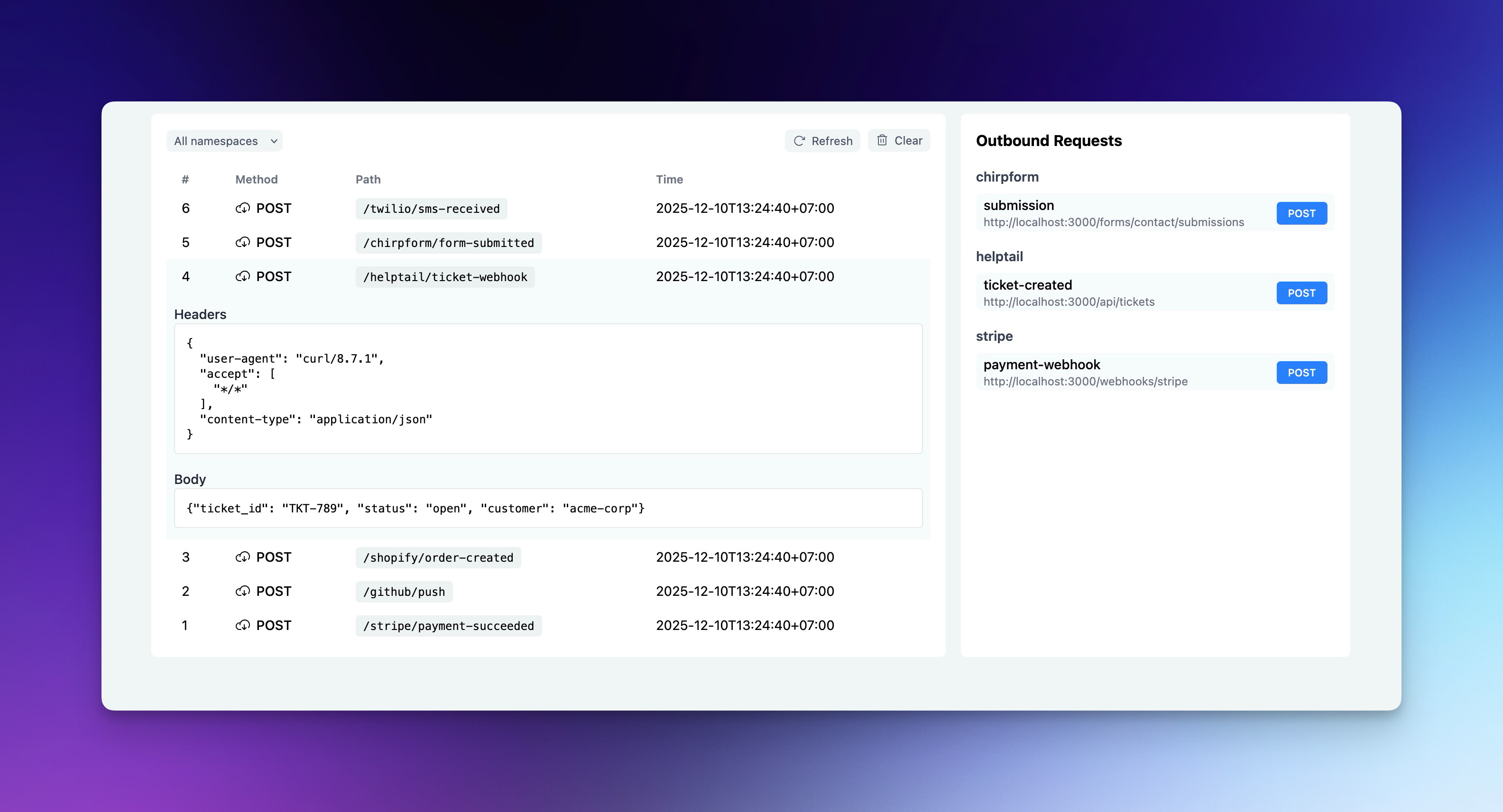
Open http://localhost:4000 in your browser to see all captured requests with headers and body.
Custom port
requestkit --port 8080
Persistent storage
By default, requests are stored in memory and cleared when you stop the server. Use file storage to persist across restarts:
requestkit --storage file
Requests are saved to ~/.config/requestkit/requestkit.db.
Custom database path
requestkit --storage file --database-path ./my-project.db
Configuration
Create a configuration file to set defaults:
User-wide settings (~/.config/requestkit/config.yml):
port: 5000
storage: file
Project-specific settings (./.requestkit.yml):
storage: memory
default_namespace: my-rails-app
Configuration precedence: CLI flags > project config > user config > defaults
Available options
| Option | Description | Default |
|---|---|---|
port |
Server port | 4000 |
storage |
Storage type: memory or file |
memory |
database_path |
Database file location | ~/.config/requestkit/requestkit.db |
default_namespace |
Default namespace for root requests | default |
Namespaces
Requestkit automatically organizes requests by namespace using the first path segment:
# Namespace: stripe
curl http://localhost:4000/stripe/payment-webhook

# Namespace: github
curl http://localhost:4000/github/push-event
Filter by namespace in the web UI. Requests to / use the default_namespace from your config.
Sending requests
Create JSON files to send HTTP requests and test your APIs. Requestkit loads request definitions from:
./.requestkit/requests/:namespace/:name.json(project-specific)~/.config/requestkit/requests/:namespace/name.json(user-wide)
Example: (.requestkit/requests/api/create-user.json):
{
  "method": "POST",
  "url": "http://localhost:3000/api/users",

  "headers": {
    "Content-Type": "application/json"
  },

  "body": "{\"name\": \"John Doe\", \"email\": \"[email protected]\"}"
}
Help
requestkit help
License
Requestkit is released under the MIT License.